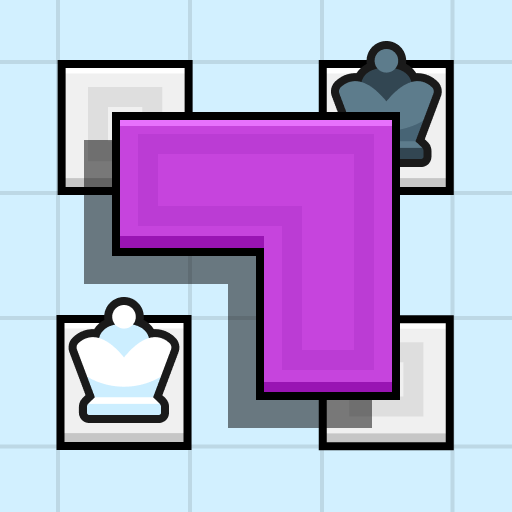




You do not need to land in the center.
How to play Blockblock
The objective
Reach the other side
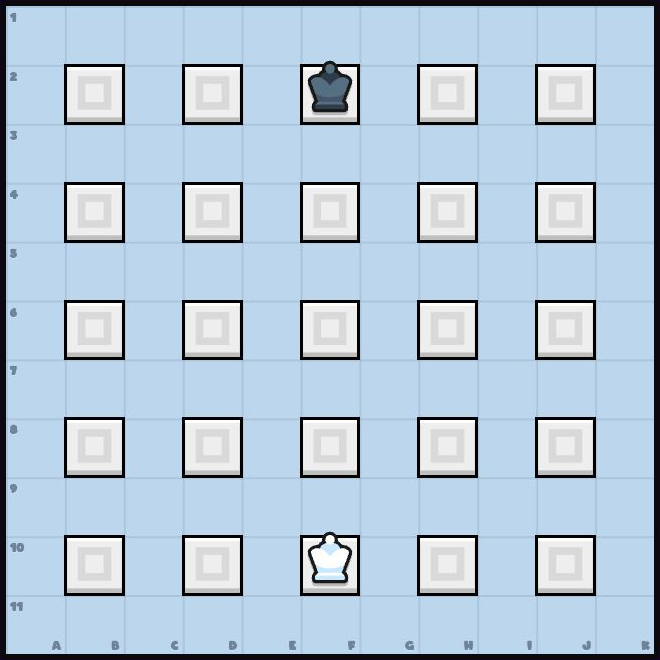
White starts at the bottom and races to any white square on the top edge. Black does the opposite. The board turns so you always see your own side at the bottom.
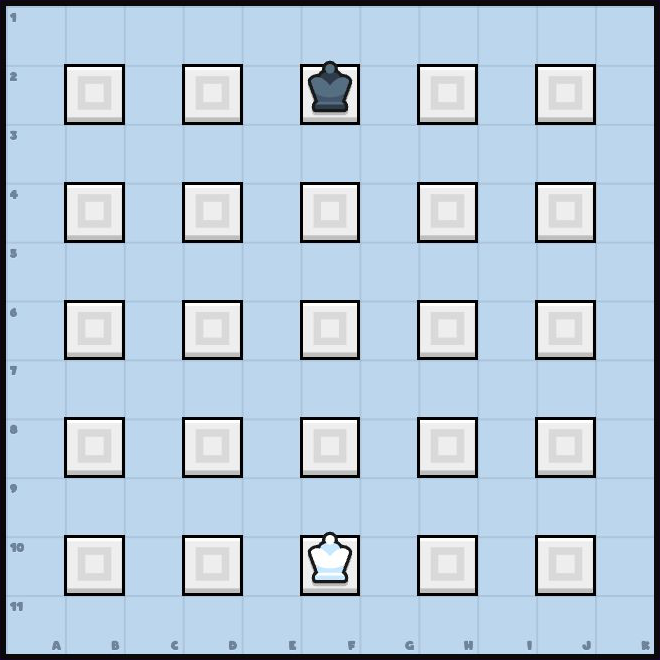 White's goalBlack's goal
Pawns race, jump, and block one another, but never leave the board.
Every normal turn
Choose one action
Move your pawn or place one tile card. Selecting, rotating, and previewing a card is free; the action is committed only when you move or place it.
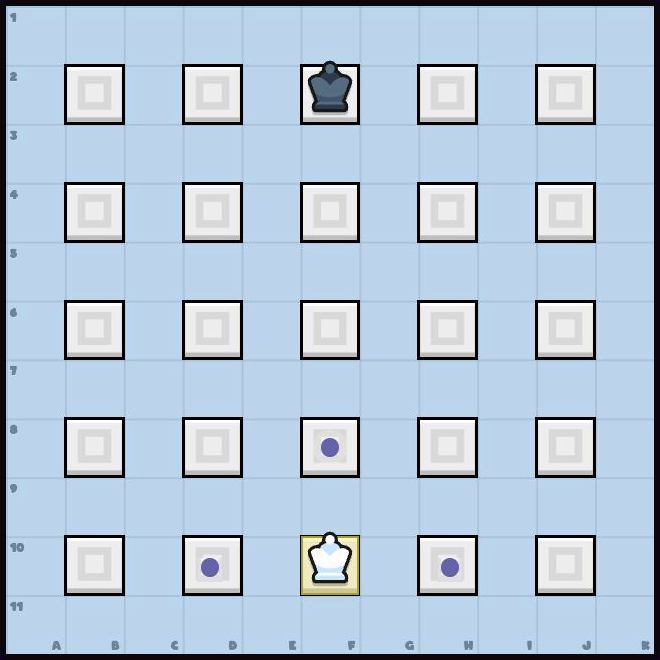
Move
Advance your pawn
Choose one highlighted white square connected by an open lane.
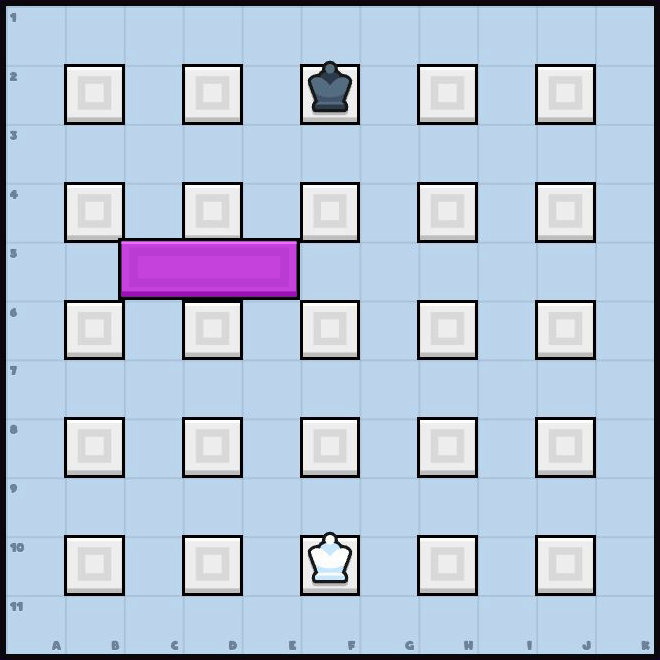
Build
Place a tile card
Rotate a card and place its shape into open build slots on the board.
A line clear is the exception: clear a full row or column and you act again with the cards still in your hand.
Pawn movement
Step, jump, or go around
Pawns move orthogonally, never diagonally on their own. A diagonal move appears only when you must go around an adjacent pawn whose straight jump is blocked.
Open lane
Move one square
Go up, down, left, or right through an open lane.
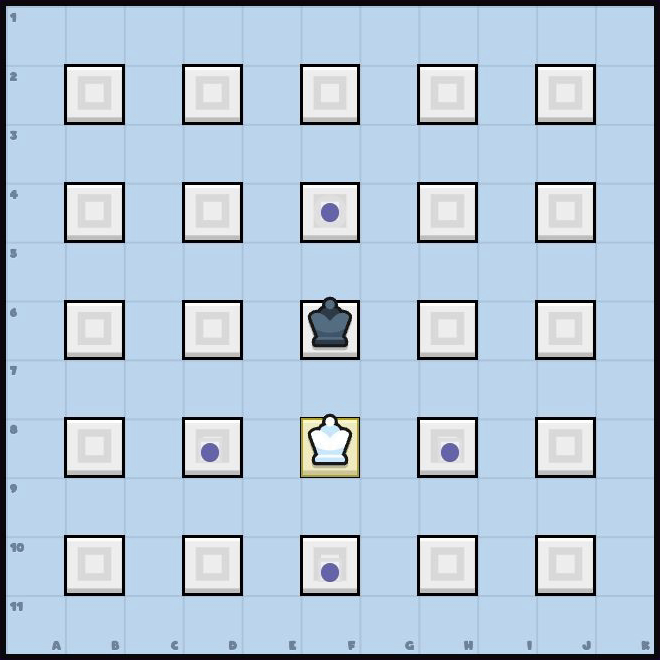
Pawn ahead
Jump a pawn
If a pawn is directly beside you and the lane behind it is open, jump straight over.
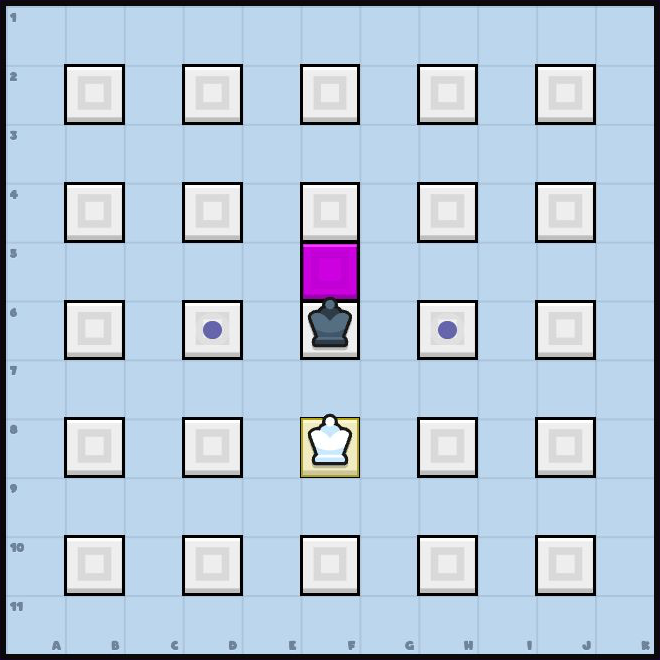
Jump blocked
Go around
If that straight jump is blocked by a tile or the board edge, move to an open side of that pawn.
Tile cards
Build the board
Each player has the same 10-card deck: two I, T, L, and J cards, plus one P and one K. Card color is visual; it does not change what the shape can do.
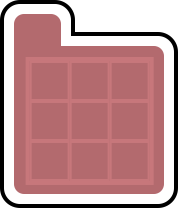
2× I2 rotations
2× T4 rotations
2× L4 rotations
2× J4 rotations
1× P1 rotation
1× K2 rotations
Fits everyone's path
- Uses a card currently in your hand.
- Stays on the board and in build slots.
- Does not overlap an existing tile.
- Leaves every active pawn a route to its goal.
No sealed-off players
- Covering a white board square.
- Placing any part outside the board.
- Stacking on occupied build slots.
- Removing every possible route to a goal.
Tiles do not have to touch another tile. A separated placement is legal when all four checks above pass.
The power move
Fill a line. Clear it. Play again.
Fill every build slot across a complete row or column. All tiles on that line disappear together and you immediately receive another action.
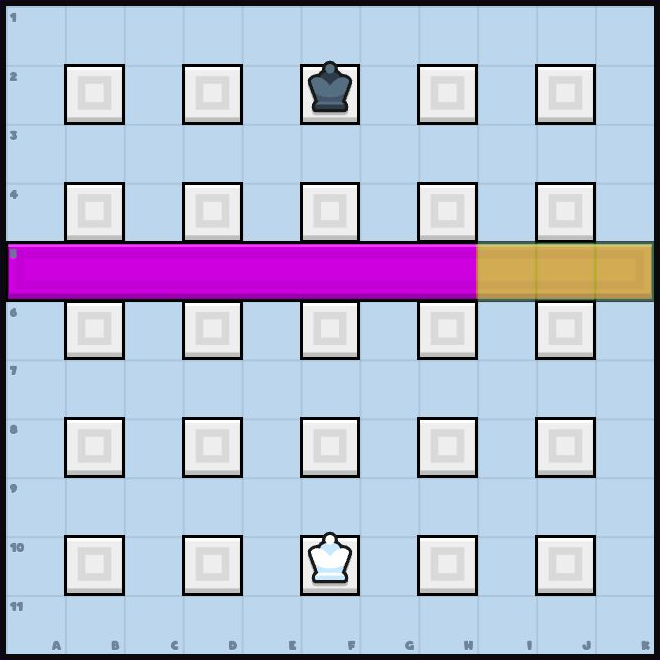 Orange preview fills the last spaces
 Open lane + bonus action
Hand, deck, discard
Plan with three cards
Every player has an independent 10-card deck and a three-card hand. Opponents can see your counts, but not the faces of your cards.
Draw 3Start the turn with a fresh hand.


Move or buildUse one action.
RefreshDiscard unplayed cards, then draw 3.

If you move
All three cards go to discard, then you draw a new hand.
If you build
The played card is consumed. The other two are discarded, then you draw three.
If you clear a line
Keep the cards left in your hand and take your bonus action before refreshing.
When the deck is empty, the discard pile is shuffled into a new deck.
Match flow
Beat the board and the clock
Only the active player's clock runs. Reaching zero ends your race, and resigning concedes your remaining placement.

Your clock, your turn
Think while your clock is running. A line-clear bonus keeps the same clock active.
First across wins
In a standard two-player race, the match ends as soon as one pawn reaches the opposite edge before move 100.

No passing
There is no pass action. Choose a legal pawn move, place a legal card, or resign.

100 moves means a draw
Every committed pawn move or tile placement counts as one move, across all players. Bonus actions count too. Move 100 ends the game in a draw, even if a pawn reaches its goal on that move. Everyone keeps their rating.
Ready check
You know enough to race.
Keep these five ideas in mind for your first match.
- 1Reach the opposite edge.
- 2Move or build once per turn.
- 3Jump adjacent pawns when the lane is open.
- 4Never seal off every route.
- 5Clear a line to act again.